
A large refurbishment is one of the most significant projects you will ever commission for your home. Done well, it transforms how you live in a space for decades to come. Done without proper thought, it becomes a source of cost, delay and frustration that lingers long after the dust has settled. The difference almost always comes down to decisions made before the first wall is touched.
We have delivered private home refurbishments across Worcestershire, Gloucestershire, the Cotswolds and the wider Three Counties, from contemporary remodels to careful work on period and listed properties. The principles below are the ones we return to on every project, regardless of scale or style. If you are weighing up a substantial refurbishment, these ten considerations are worth your time at the outset.
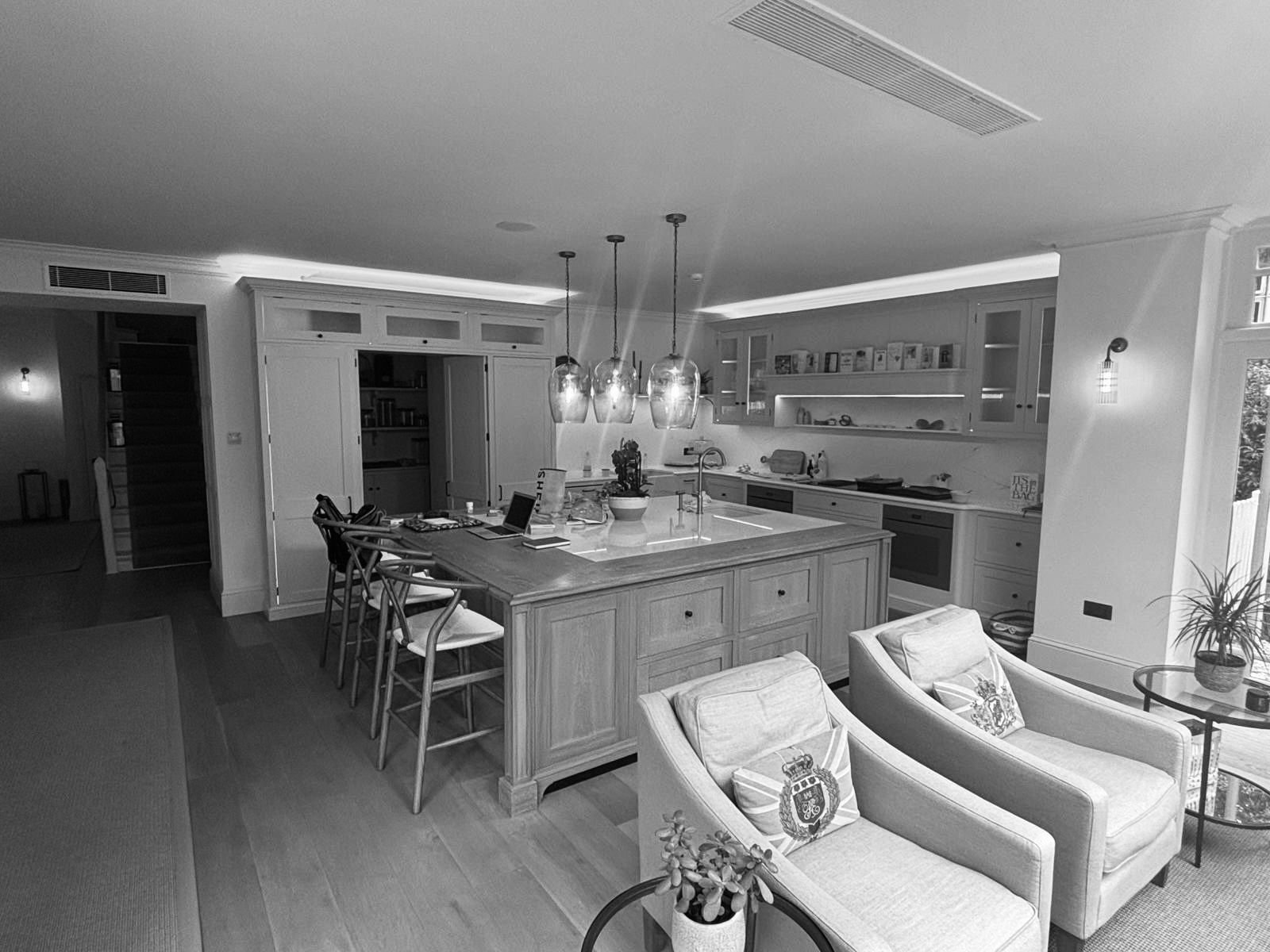
Avenue Road, Malvern
1. Start with a clear and considered brief
Everything begins with a brief, and a vague brief produces a vague result. Before you speak to a single contractor or architect, spend time understanding how you actually want to live in the finished home. Which rooms matter most to you? Where does natural light fall through the day, and how might that change with a reconfigured layout? What frustrates you about the house now, and what do you want to keep?
A strong brief separates the essential from the desirable, and it gives everyone who works on the project a shared point of reference. We find that the homeowners who invest properly in this stage make fewer expensive changes once work is under way, because the thinking has already been done. Bring photographs, sketches and examples of finishes you admire. The more specific you can be, the more accurately your team can price and plan the work.
2. Set a realistic budget, with contingency built in
A refurbishment budget needs to account for far more than the headline build cost. Professional fees, surveys, planning applications, fixtures, fittings, landscaping and the inevitable adjustments along the way all add up. The most common cause of stress on a project is a budget that was never realistic to begin with.
We always recommend holding a contingency of between 10 and 15 per cent of the construction cost, and more where the property is older or its condition is uncertain. Period homes in particular have a habit of revealing surprises once the floors come up, and a sensible reserve means an unexpected finding becomes a manageable decision rather than a crisis. Be honest with your contractor about your budget from the start. A figure shared openly allows us to specify and sequence the work to suit it, whereas a figure withheld simply delays the moment everyone has to confront reality.
3. Choose your contractor with care
The contractor you appoint will shape the quality, the timeline and the experience of the entire project, so this is not a decision to rush or to make on price alone. Look beyond the quotation at how a firm operates: their accreditations, their references, the standard of their previous work and how clearly they communicate.
Accreditations exist precisely so that you do not have to take quality and safety on trust. As a firm, we hold SafeContractor, CHAS, Constructionline and FMB membership, each of which involves independent assessment of how we work. Ask to see comparable completed projects, and where you can, speak to past clients directly. A reputable contractor will welcome the scrutiny. Our work on the refurbishment at Avenue Road in Malvern, for instance, is the kind of project we are always happy to discuss in detail, because the finish and the process behind it speak for themselves.
4. Understand planning, building regulations and consents
Few things derail a refurbishment more comprehensively than discovering, midway through, that the work required consent nobody applied for. Larger projects frequently touch on planning permission, building regulations and, where the property is protected, listed-building consent.
If your home sits within a conservation area, or carries a listing, the rules governing what you may alter are considerably more exacting, and the consequences of getting it wrong are serious. We have carried out sensitive work on period and listed properties, including The Heriotts in Droitwich, a Grade II listed scheme where every intervention had to respect both the regulations and the character of the building. The lesson from that kind of work is simple: establish the consents you need at the very beginning, and build the time they take into your programme. A good contractor will guide you through this, but the responsibility for securing permission ultimately rests with you as the homeowner.
5. Commission the right surveys early
A large refurbishment is only as sound as the building beneath it, and assumptions about that building are expensive to get wrong. Structural surveys, drainage investigations, damp and timber assessments and, in older homes, checks for materials such as asbestos all belong at the front of the process rather than the middle.
Commissioning surveys early gives you a true picture of what you are working with before you commit to a design that the structure cannot support. It also informs the contingency we discussed earlier, because the fewer unknowns you carry into a project, the smaller the financial cushion you need to absorb them. We would always rather invest in proper investigation at the start than discover a structural issue once the work is well advanced, when the cost and disruption of addressing it multiply. Knowledge gathered early is one of the soundest investments you can make in a refurbishment.
6. Plan the programme and sequencing properly
A refurbishment is a sequence of trades and tasks that must happen in the right order, and the choreography of that sequence matters enormously. Structural work precedes first-fix services, which precede plastering, which precedes second fix and decoration. When the programme is planned with care, each trade flows into the next without idle gaps or costly returns to site.
This is where experienced project management earns its place. A clear programme tells you what is happening when, who is responsible and where the critical milestones fall. It also makes problems visible early, so they can be solved before they affect the wider timeline. On our private home projects we manage this sequencing closely, coordinating our own teams and our wider supply chain so that the work progresses steadily rather than in fits and starts. Ask any prospective contractor how they plan and monitor their programme. The clarity of their answer tells you a great deal.
7. Specify materials and finishes that will last
In a luxury refurbishment, the specification is where your investment becomes visible, and it deserves genuine attention. The difference between a good finish and an exceptional one usually lies in choices that are easy to overlook: the quality of the joinery, the consistency of the plasterwork, the way materials meet at a junction, the durability of the surfaces you will touch every day.
We encourage homeowners to think about longevity rather than fashion alone. Materials chosen for their craftsmanship and durability reward you for years, whereas those chosen purely for a moment soon date. Our work at Pittville in Cheltenham, which included sash window replacement and new render, is a reminder that the right specification protects and enhances a property well beyond its initial appearance. Take the time to see and handle samples, understand how finishes will weather and age, and be willing to invest where it counts. The areas you live with most closely are rarely the place to economise.
8. Think about building services and energy performance
The systems hidden within your walls do more to determine how a home feels than almost anything you can see. Heating, electrics, plumbing, ventilation, lighting and increasingly the smart technology that ties them together all need to be designed as part of the whole, not added as an afterthought once the layout is fixed.
A substantial refurbishment is the ideal moment to improve the energy performance of your home, because the fabric is already open and accessible. Insulation, glazing, efficient heating and considered ventilation can transform comfort and reduce running costs for the long term, and the work is far cheaper to carry out now than to retrofit later. We plan services early so that the infrastructure supports how you intend to live, with sufficient provision for the demands a modern home places on it. Decisions about lighting and power in particular are difficult and disruptive to change once the walls are closed, so they belong in the design from the outset.
9. Decide how you will live through the works
A large refurbishment is disruptive by its nature, and being honest with yourself about that disruption makes the whole experience far easier to bear. Will you remain in the property whilst the work proceeds, or move out for all or part of the programme? Each option carries implications for cost, timeline and your own peace of mind.
Living on site through major works is possible, and we frequently phase projects so that families can stay in their home, but it asks something of you, and the programme often runs a little longer as a result. Moving out, by contrast, usually allows the work to proceed faster and more efficiently, at the cost of temporary accommodation. There is no single right answer, only the answer that suits your circumstances. What matters is that you decide deliberately and discuss it with your contractor early, so that the programme is built around a realistic picture of how the home will be used during the work.
10. Insist on thorough snagging, handover and aftercare
The final stage of a refurbishment is the one homeowners most often underestimate, yet it is the stage that determines how you feel about the project for years afterwards. A proper handover involves a careful snagging process, where every detail is inspected and any imperfection is recorded and put right before the work is signed off.
Good aftercare does not end at handover. Materials settle, and a small number of minor adjustments in the months that follow are entirely normal. A contractor worth appointing stands behind their work and remains contactable when you need them, rather than disappearing the moment the invoice is paid. We provide comprehensive maintenance services precisely because we believe a relationship with a home should continue long after the refurbishment is complete. When you assess a contractor, ask what their handover involves and what support they offer afterwards. The answer reveals how seriously they take the quality of their own work.
Planning your refurbishment with confidence
A large luxury refurbishment rewards careful preparation more than almost any project you will undertake at home. The homeowners who plan thoroughly, choose their team well and commit to the right decisions early are the ones who look back on the process with satisfaction rather than relief. Each of the considerations above is, in its own way, a means of removing uncertainty before it becomes a cost.
If you are planning a refurbishment across Malvern, Cheltenham, the Cotswolds or the wider Three Counties, we would be glad to talk to our team about your project and how we might approach it. With more than 60 years of combined leadership experience and a portfolio of private homes behind us, we bring the rigour and craftsmanship that work of this kind deserves.
Build with Confidence.